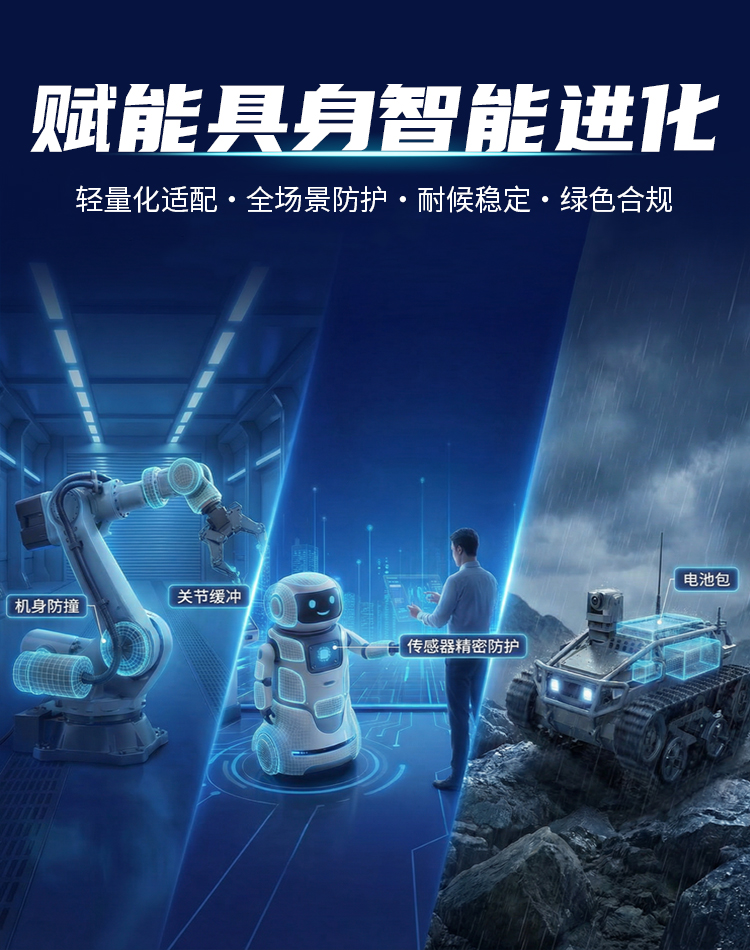
Adapt product system to specific intelligent scenarios
<
>
<
>
Detailed explanation of key application scenarios
Airframe collision avoidance and external protection
a. Pain points: Equipment is prone to collision during operation, the fuselage is fragile, and the energy consumption is high
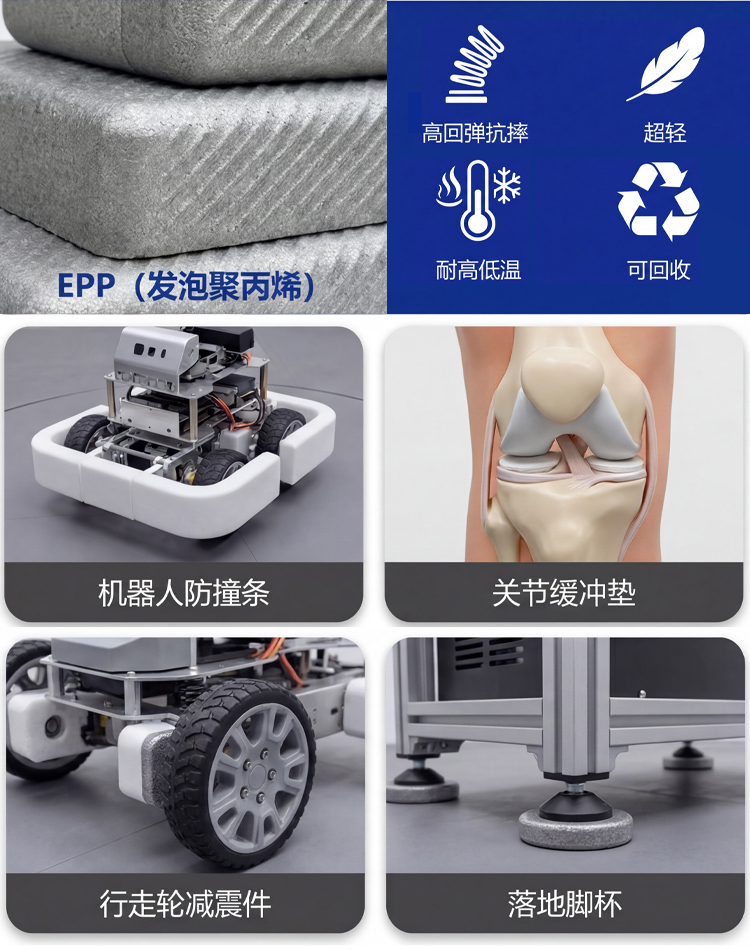
b. Material selection: EPP (density 30 - 40 kg/m ³)+ EPO composite application
c. Core role: 1.5m drops without damage, absorbs 80% of collision energy; reduces weight by 30%+ compared with traditional plastic parts, reducing exercise energy consumption
d. Adaptation scenarios: industrial handling robot, service robot body, special operation robot shell protection
e. Drawing: Installation drawing of robot EPP anti-collision strip
Vibration absorption of joints and walking mechanism
a. Pain points: Sports vibration wears down joints, and poor road conditions are easy to shake
b. Material selection: High resilience EPP (40 - 50 kg/m ³)
c. Core benefits: attenuate 5 - 2000 Hz vibration, reduce joint wear, and improve motion accuracy
d. Adaptation scenarios: AGV robot joints, service robot walking wheels, outdoor inspection robot tracks
e. Photo: Close-up view of robot joint EPP cushion
(1) Body and motion system (lightweight + protective core)
Electronic control system protection and heat dissipation assistance
a. Pain points: The electronic control module is afraid of short circuit, vibration, and unstable temperature
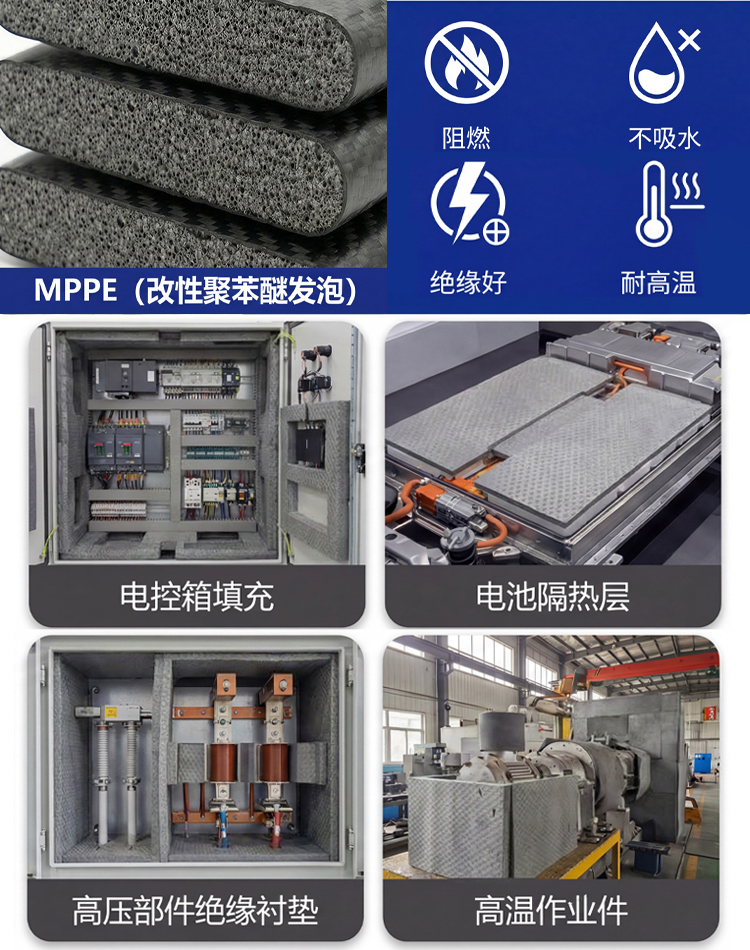
b. Material selection: MPPE (flame retardant grade)+ EPE buffer inner support
c. Core benefits: flame-retardant insulation prevents short circuit, auxiliary heat dissipation maintains stable operation at-40 ℃~110 ℃, absorbs vibration and prevents component damage
d. Adaptation scenarios: industrial robot electronic control box, intelligent device main control module
e. Matching drawings: MPPE filling + EPE inner support disassembly drawings of electronic control box
Battery pack safety protection
a. Pain points: There is a high risk of battery thermal runaway, and it is easy to be injured in sports collisions
b. Material selection: MPPE insulation layer + EPP buffer bracket
c. Core benefits: delay heat spread for ≥ 60 seconds, absorb impact and prevent battery damage, and operate safely in a humid environment
d. Adapt scenarios: robot power battery pack, smart wearable battery compartment
e. Drawing: schematic diagram of battery pack protection structure
(2) Electronic control and battery system (core of safety protection)
Precision component protection and adaptation
a. Pain points: sensors, cameras and other precision parts are afraid of scratches and vibrations
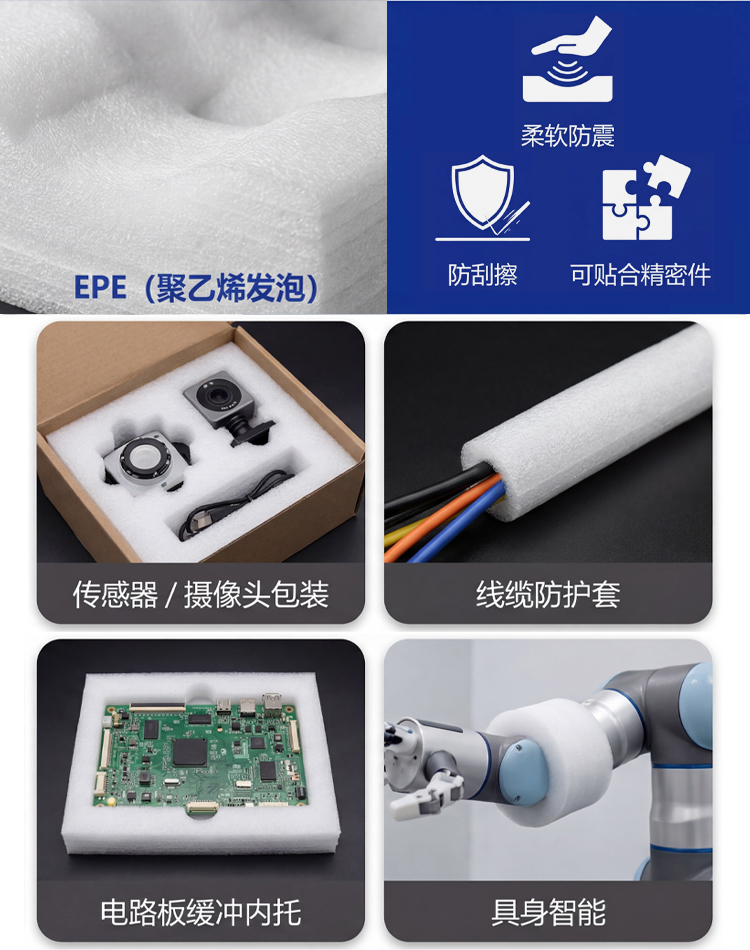
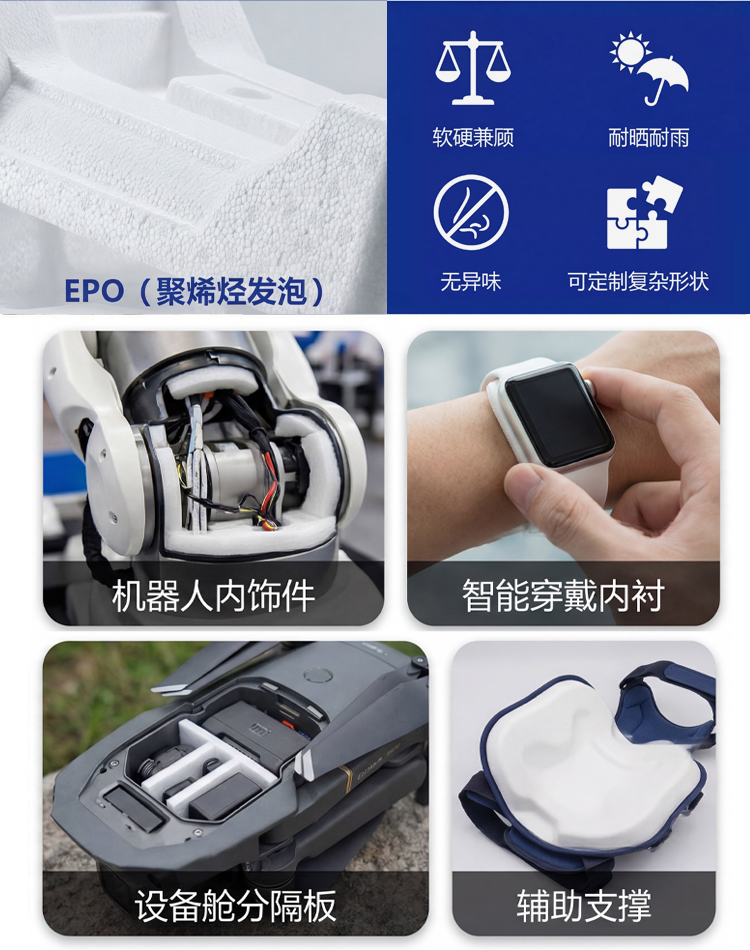
b. Material selection: EPE composite foam + EPO customized parts
c. Core benefits: soft fit scratch resistant, custom shape accurate support, moisture and dust
d. Adapt scenarios: robot vision sensors, precision transmission components
e. Photo: Real shot picture of EPE sensor protection inner support
Storage and transport packaging
a. Pain points: Long-distance transportation is prone to bumps, and environmental changes affect equipment
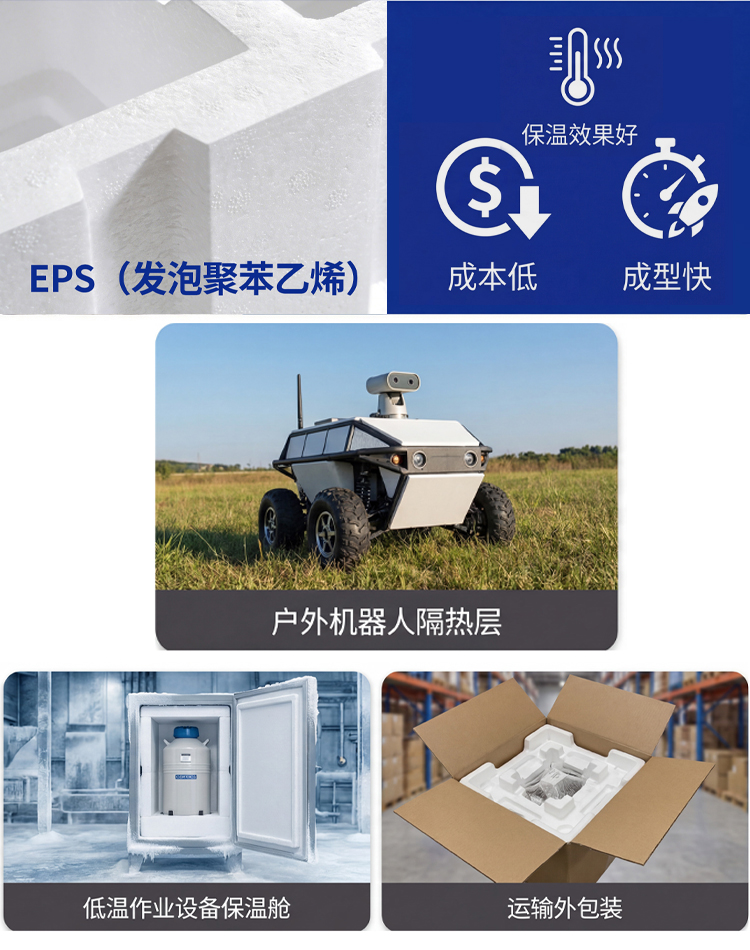
b. Material selection: EPE inner support + EPS outer packaging + EPP fixing bracket
c. Core benefits: -30 ℃~60 ℃ environmental adaptation, full-dimensional buffer and anti-collision, heat insulation and moisture proof
d. Adaptation scenarios: robot transportation, precision parts turnover
e. Drawing: Real shot picture of the overall robot transportation packaging
(3) Logistics and operation equipment (efficient adaptation scenarios)
Outdoor/weather-resistant operation adaptation
a. Pain points: Outdoor sun and rain make the equipment easy to age; performance in low-temperature environments is reduced
b. Material selection: EPO structural parts + EPS insulation layer
c. Core income: There is no aging outdoors for 5 years, and insulation maintains a stable operating temperature of the equipment.
d. Adaptation scenarios: outdoor inspection robots, low-temperature operation robots
e. Drawing: Real shot of outdoor robot EPO structural parts
Clean/environmentally friendly scene adaptation
a. Pain points: Medical and food scenarios have high requirements for environmental protection and no odor
b. Material selection: EPP (100% recyclable)+ EPE (low VOC)
c. Core benefits: No odor, no harmful substances, recyclable, and meets cleanliness standards
d. Adaptation scenarios: medical service robots, food industry handling robots, clean workshop AGVs
e. Photo: Real shot of medical robot EPP lining
(4) Ground support and supporting equipment (support scenarios)