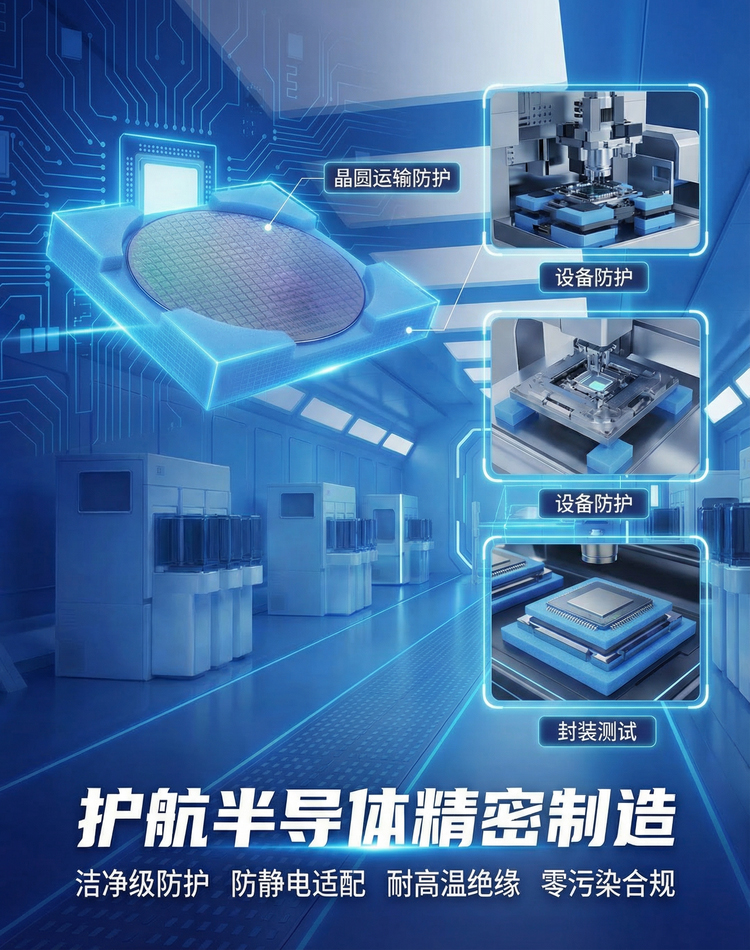
Adapting product system to semiconductor scenarios
<
>
<
>
Detailed explanation of key application scenarios
Wafer transportation protection
a. Pain point: Wafer is susceptible to vibration, scratching, and electrostatic breakdown, which affects yield.
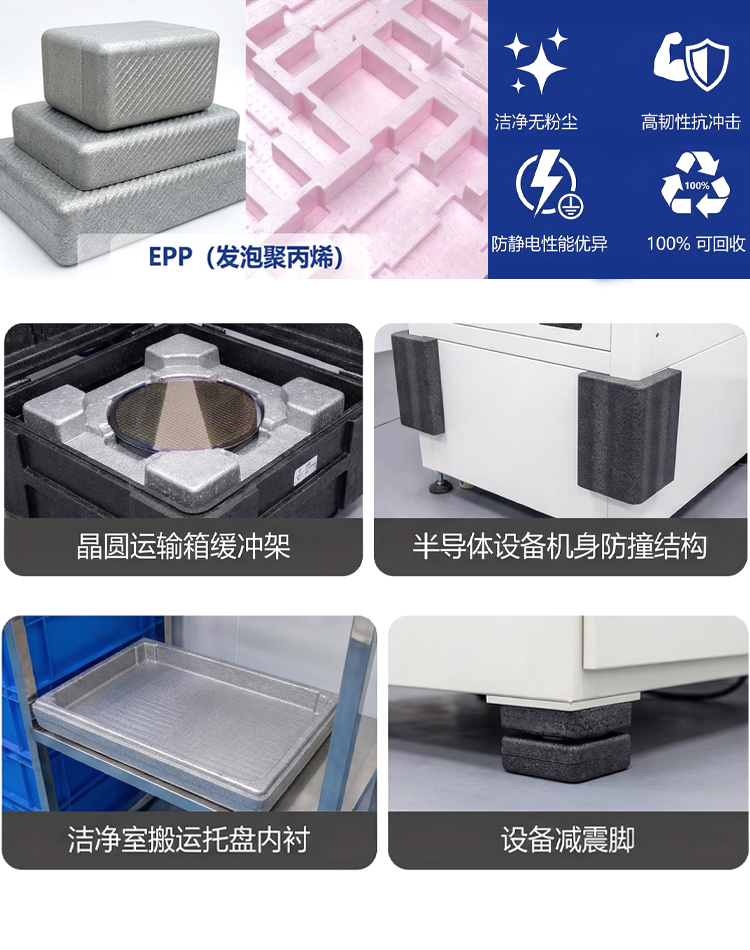
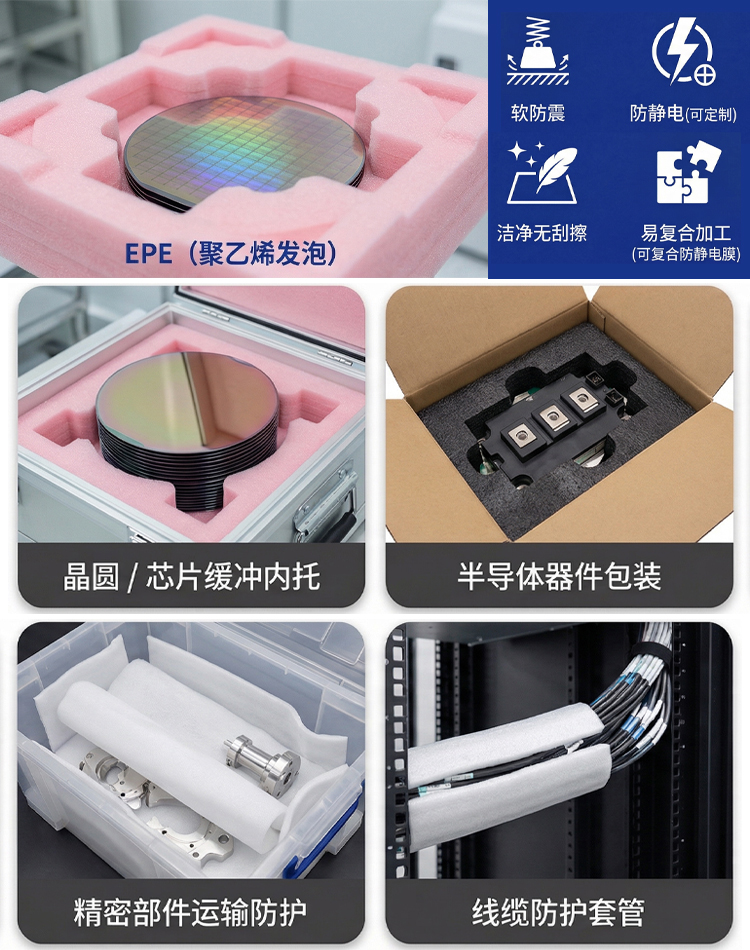
b. Material selection: Anti-static EPE inner support + EPP fixing frame
c. Core benefits: Customized card slots are adapted to wafers of mainstream size, static electricity is quickly dissipated, drops without displacement, is clean and dust-free, significantly improving yield
d. Adapted scenarios: long-distance wafer transport box, clean room turnover box, lithography machine wafer transport buffer
Photo: Real shot of EPE wafer inner support + EPP holder combination
Chip and device packaging
a. Pain points: Chip storage and transportation are susceptible to moisture, scratching, and chemical pollution
b. Material selection: Anti-static EPE composite film + EPO customized parts
c. Core benefits: moisture-proof and scratch resistant, chemical corrosion resistance, no volatile pollution, suitable for long-term storage
d. Adaptation scenarios: packaging of finished chips, transportation of semiconductor sensors, protection of precision integrated circuits
e. Photo: Real shot of the chip EPO customized inner holder
(1) Wafer and chip packaging and transportation (core protection scenarios)
Equipment body and structural protection
a. Pain points: The equipment is sophisticated and expensive, vulnerable to collisions, and high operating energy consumption
b. Material selection: clean grade EPP + EPO composite
c. Core benefits: EPP absorbs energy and is clean and dust-free;EPO adapts to complex curved surfaces, significantly reduces weight compared with traditional metal parts and reduces energy consumption
d. Adapted scenarios: lithography machine body protection, etching machine corner collision avoidance, testing equipment shell protection
e. Drawing: Installation diagram of EPP collision strip of lithography machine
Equipment shock absorption and precision positioning
a. Pain point: Equipment running vibration affects process accuracy, positioning deviation
b. Material selection: High resilience EPP
c. Core benefits: Effectively attenuate vibration, improve wafer processing yield, and be anti-slip and stable without displacement
d. Adapt scenarios: lithography machine, ion implanter, and testing equipment shock-absorbing feet
e. Drawing: Close-up view of EPP shock-absorbing feet of semiconductor equipment
(2) Protection and adaptation of semiconductor equipment (stable operation scenarios)
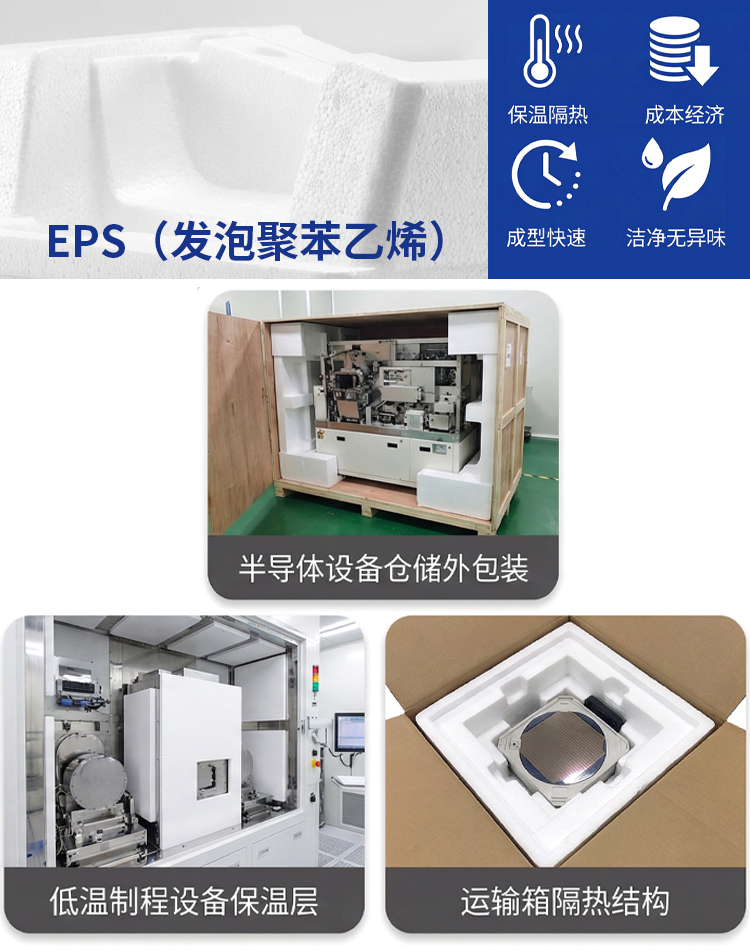
High temperature process heat insulation protection
a. Pain points: High temperature conduction damages parts, low temperature process temperatures are unstable
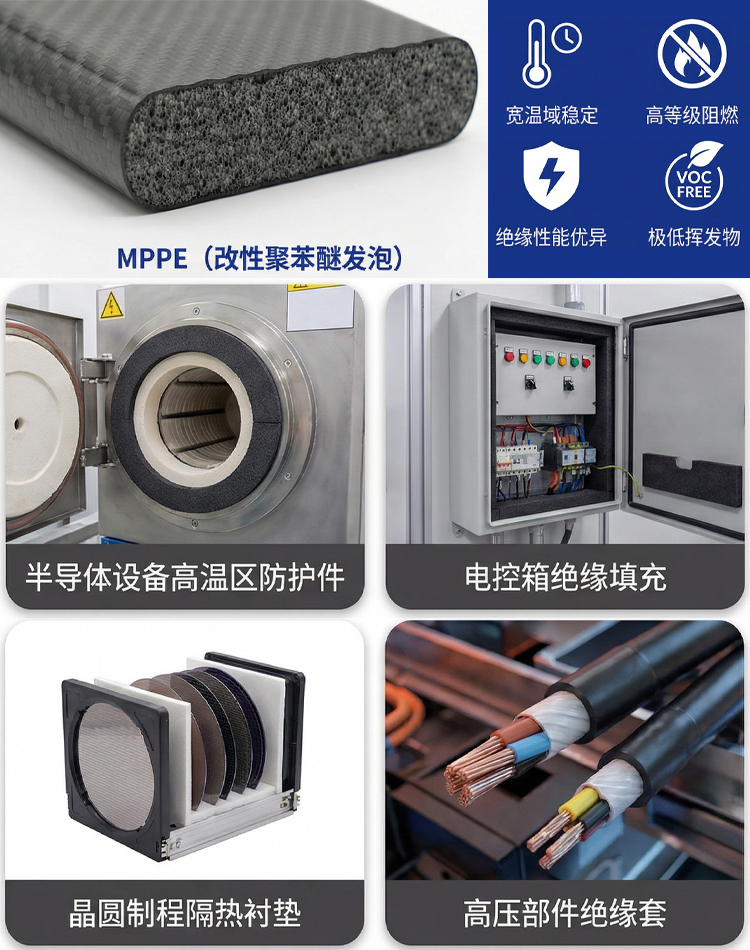
b. Material selection: MPPE (flame retardant grade)+ EPS insulation layer
c. Core benefits: MPPE is resistant to 110 ° C high temperatures and flame retardant insulation;EPS maintains low temperature stability to ensure process accuracy
d. Suitable scenarios: annealing furnace protection, low-temperature plasma etching machine insulation, packaging and testing high-temperature area liner
e. Accompanying pictures: Real shot pictures of MPPE protective parts of annealing furnace
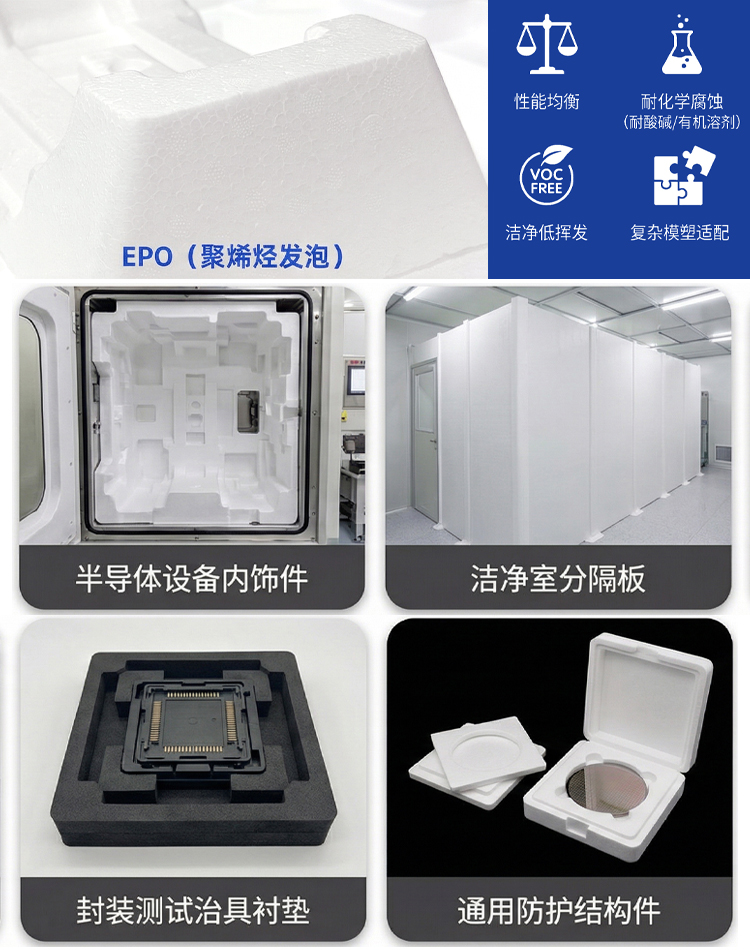
Packaging test fixture and buffer
a. Pain points: fixture volatile contamination, test probe damage chip
b. Material selection: EPO jig liner + EPE buffer
c. Core benefits: EPO is clean, low-volatile, and resistant to chemical corrosion;EPE buffer prevents probe crush and anti-static electricity
d. Adaptation scenarios: chip packaging fixture, test bench liner, probe card protection
e. Drawing: Real shot picture of the EPO liner of the packaging test fixture
(3) Process and packaging test scenarios (clean adaptation scenarios)
Clean room handling and storage
a. Pain point: Handling tools generate dust and static electricity, polluting the clean environment
b. Material selection: clean grade EPP tray + EPO divider plate
c. Core benefits: EPP has no dust and can be disinfected repeatedly;EPO is easy to clean, resistant to chemical corrosion, and suitable for clean rooms
d. Adaptation scenarios: clean room wafer trays, device storage shelves, and handling robot trays lined
e. Photo: Real shot picture of EPP handling trays in clean room
Supporting equipment protection
a. Pain points: Short-circuited electronic control equipment, worn cables, causing pollution
b. Material selection: MPPE insulation + EPE cable protection
c. Core benefits: MPPE has excellent insulation and is clean and dust-free;EPE is soft, scratch-resistant and anti-static, and is suitable for clean room wiring
d. Adapt scenarios: clean room electric control box, equipment cables, vacuum equipment protective parts
e. Drawing: Disassembly drawing of MPPE insulation parts of electric control box
(4) Clean room and supporting equipment (environmental adaptation scenarios)